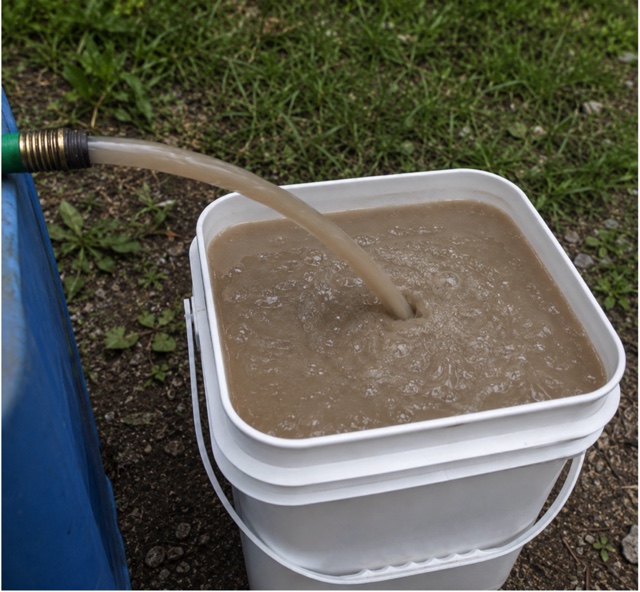
Have you ever had your rainwater tank cleaned, only to discover a stubborn layer of sediment or sticky residue still clinging to the bottom of the tank?
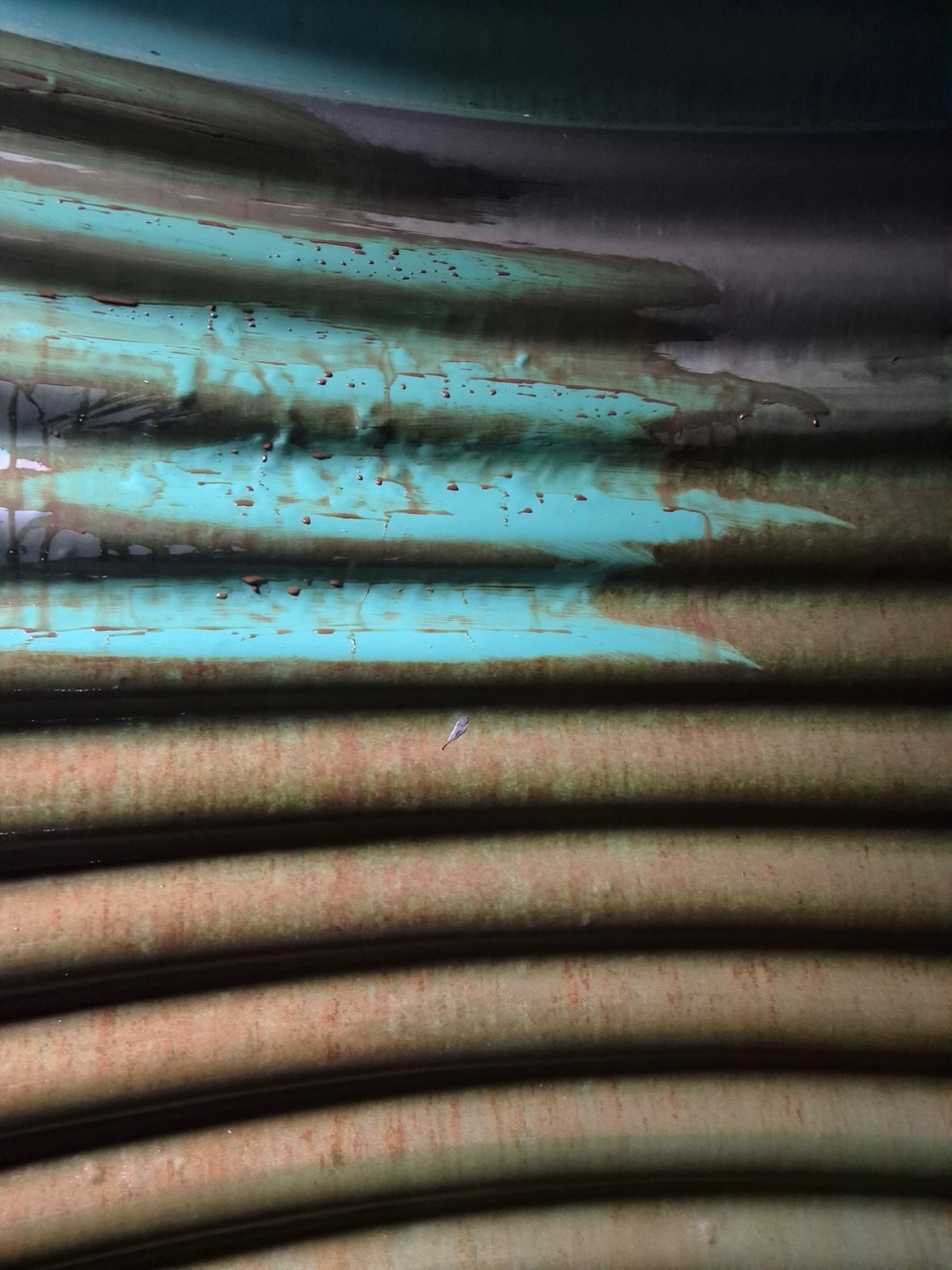
Unlike normal loose sediment that can usually be vacuumed from the tank floor, sometimes we encounter a thin, compacted or slimy layer that simply doesn't want to move. A vacuum head may pass straight over it, smear it across the tank floor, or remove only part of the deposit.
So, what is this stubborn material, where does it come from, and could it affect the quality of your drinking water?
What is the sediment in a rainwater tank?
A useful general term for this material is adherent organic sludge. More technically, it may be described as biofilm-bound sediment.
Rainwater tanks don't collect rainwater alone. Everything that lands on your roof and washes into your gutters has the potential to eventually find its way into your tank:
- Fine dust, soil and clay
- Pollen
- Leaves, flowers, bark and other plant material
- Tannins and other tree-derived organic matter
- Bird and animal droppings
- Insects and microorganisms
- Algae
- Roof-borne environmental contaminants
- Honeydew produced by sap-feeding insects
- Small amounts of oils or resinous material from surrounding vegetation
Initially, much of this material may settle as relatively loose sediment. But given enough time, moisture and microbial activity, something else can begin to happen.
Why does rainwater tank sediment become sticky?
The answer may be biofilm.
Biofilm is a community of microorganisms that attaches itself to a surface and produces a protective slimy matrix. This matrix contains substances known as extracellular polymeric substances (EPS).
Think of EPS as a type of biological glue.
It can bind microorganisms, microscopic particles and decomposing organic matter together and help them adhere to surfaces.
Inside a rainwater tank, this means fine sediment that would otherwise remain loose can gradually become incorporated into a cohesive layer attached to the tank floor or walls. The result is a layer that is typically:
- Slimy or gelatinous when disturbed
- Compacted and cohesive
- Firmly attached to the tank surface
- Resistant to normal vacuum cleaning
- Smeared rather than collected by a vacuum head
- Difficult to remove without agitation, brushing or more intensive cleaning
This is why two rainwater tanks in the same area can sometimes behave very differently when cleaned.
Can eucalyptus sap cause sticky tank residue?
Not necessarily.
Australian homes surrounded by eucalyptus and other native trees can collect considerable amounts of organic material on their roofs.
Pollen, flowers, leaves, bark, tannins and insect activity can all contribute to what eventually reaches the rainwater tank.
Honeydew can also be a contributing factor. Honeydew is a sugary, sticky substance produced by sap-feeding insects such as psyllids, aphids and scale insects. Where these insects are active in trees overhanging a roof, honeydew can coat roof surfaces and help trap dust, pollen and other organic debris.
Eucalyptus trees can also produce kino, a resinous material released particularly from damaged trunks or branches. However, it would be misleading to assume that a sticky deposit found in the bottom of a rainwater tank is simply ‘eucalyptus sap’.
By the time material has travelled from the surrounding environment onto the roof, through the gutters and into the tank, it has usually become part of a much more complex mixture of sediment, decomposing vegetation and microbial growth.
What about pollen, flowers and tannins?
These can all contribute to the organic load entering a rainwater tank.
Pollen can be particularly noticeable at certain times of the year, while flowering trees can deposit large quantities of flowers, pollen and fine organic debris onto roof catchments within a relatively short period.
Tannins are naturally occurring organic compounds found in leaves, bark and other plant material. As this vegetation decomposes, tannins can leach into rainwater and may contribute to yellow, brown or tea-like discolouration.
The amount entering a tank can therefore vary considerably according to season, surrounding vegetation, weather conditions and how well the roof and gutter catchment is maintained.
This is one reason a tank that remains relatively clean for much of the year can suddenly accumulate significantly more organic material during flowering, leaf fall, storms or extended dry periods followed by heavy rain.
Can rainwater tank sediment affect drinking water?
The organic material itself is only part of the issue.
The greater concern is what can happen when organic matter, moisture and microorganisms remain together for extended periods.
Accumulated sludge can provide an environment where microorganisms and biofilm can develop. As organic material decomposes, conditions near the bottom of the tank can also become increasingly low in oxygen. This can lead to:
- Bacterial and microbial growth
- Biofilm development
- Unpleasant tastes and odours
- Discolouration
- Increased turbidity
- Anaerobic conditions within accumulated sludge
- Increased demand on water treatment and filtration systems
The water above the sediment may still appear perfectly clear.
That's an important point: clear water doesn't necessarily mean a clean tank.
How sediment affects water filtration and UV treatment
Yes.
A well-designed drinking water treatment system works best when excessive sediment and organic matter are controlled before the water reaches the treatment equipment.
Suspended particles and turbidity can interfere with disinfection processes, while excessive sediment can place additional load on filtration systems.
This is particularly important with ultraviolet (UV) disinfection. UV systems rely on ultraviolet light penetrating the water effectively. Excessive turbidity or suspended material can reduce UV transmission and potentially shield microorganisms from adequate exposure.
Water sanitisation should therefore not be viewed as a substitute for physically removing excessive accumulated sediment and organic matter.
A clean tank, appropriate filtration and correctly maintained disinfection system work together as part of an overall water-quality management approach.
Why rainwater tank vacuuming may not remove sticky sludge
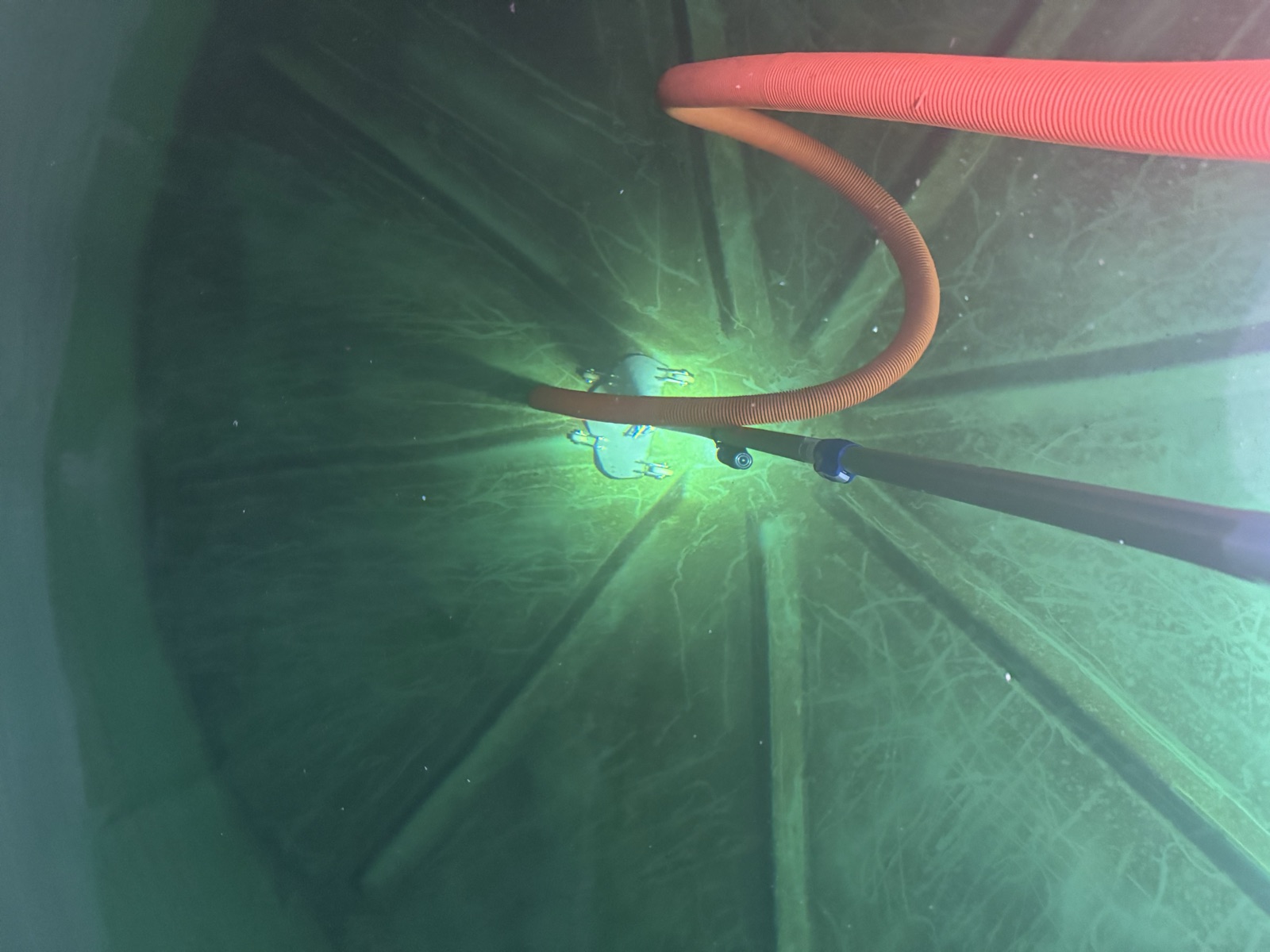
Pristine Water Systems normally removes accumulated sediment from the floor of a rainwater tank while retaining the majority of the stored water.
Loose sediment, silt and sludge can generally be vacuumed effectively.
Adherent organic sludge can be different.
Once sediment has become bound together by biofilm or compacted onto the tank surface, suction alone may no longer be sufficient to dislodge it.
Depending on the severity and condition of the deposit, additional physical agitation, brushing or a more comprehensive tank clean may be required.
The appropriate cleaning method should therefore be determined by the actual condition of the tank rather than assuming every sediment layer will respond in the same way.
How to prevent sediment in a rainwater tank
Your rainwater tank is effectively the final collection point for your entire roof catchment.
Reducing the amount of contamination entering the tank in the first place can significantly reduce sediment accumulation. Good practice includes:
- Keeping roofs and gutters clear of leaves, flowers and debris
- Maintaining gutter guards and inlet strainers
- Keeping first-flush diverters clean and operational
- Trimming overhanging vegetation where practical
- Maintaining mosquito and vermin-proof screens
- Checking wet-system pipework for stagnant organic material
- Inspecting tank sediment levels regularly
- Cleaning the tank before excessive sludge accumulates
Properties surrounded by heavily flowering or shedding trees may require more frequent inspection because their organic loading can be considerably greater than that of an exposed roof catchment.
Signs your rainwater tank may need cleaning
One of the misconceptions about rainwater tanks is that cleaning is only necessary when the water becomes dirty, develops an odour or starts tasting unusual.
By that stage, the tank may already contain a significant accumulation of organic material.
Sediment settles at the bottom of the tank, where it is largely out of sight. Biofilm can also develop on submerged surfaces and within pipework without producing an obvious visual warning at the tap.
Regular inspection allows these problems to be identified before they become more difficult to manage.
The Pristine Water Systems approach
At Pristine Water Systems, we don't just look at the water coming from your tap. We assess the condition of the whole stored-water system – from catchment to tank and tank to tap.
Our technicians can inspect the accumulation of sediment and organic material within the tank and determine whether standard sediment removal is suitable or whether more intensive cleaning is required.
Our QuadClean™ process is designed to remove accumulated sediment and sludge with minimal loss of stored water wherever conditions allow. The water can then be circulated, treated and sanitised using AqueousPro™, helping restore and maintain the quality of the stored water.
Where drinking water filtration or UV disinfection is installed, the system should also be inspected and maintained to ensure it is operating correctly.
Do you have sediment or sludge in your rainwater tank?
If you've noticed sticky, slimy or stubborn sediment in your rainwater tank, it may be more than ordinary dirt.
It could be a combination of fine sediment, pollen, decomposing vegetation and other roof-borne organic material that has become bound together by microbial biofilm.
And while you may not be able to see it from the surface, what's accumulating on the bottom of your tank can ultimately influence the quality of the water coming out of your tap.
Regular inspection, catchment maintenance, sediment removal, appropriate sanitisation and correctly maintained filtration can all play a role in protecting the quality of your stored drinking water.
If you're unsure what's building up in your rainwater tank, contact your local Pristine Water Systems technician for a tank and water quality assessment.
Frequently asked questions about rainwater tank sediment
Is sediment in a rainwater tank dangerous?
Sediment in a rainwater tank is not always dangerous, but it should not be ignored. Fine dust, soil and other loose particles can settle naturally at the bottom of the tank. However, accumulated organic matter and sludge may support microbial growth and biofilm development.
The water above the sediment may still look clear, so appearance alone is not always a reliable indication of water quality. If the rainwater is used for drinking, cooking or bathing, regular tank inspection, appropriate cleaning and water treatment are important.
What causes brown sludge in a rainwater tank?
Brown sludge in a rainwater tank can develop from dust, soil, pollen, leaves, bark, flowers, tannins, insects, animal droppings and other organic material washed from the roof catchment.
Over time, this material settles at the bottom of the tank and begins to decompose. Microbial activity may then bind the sediment together, creating a brown, slimy or sticky layer on the tank floor or walls.
Why is the sediment in my rainwater tank sticky?
Sticky rainwater tank sediment may contain biofilm. Biofilm develops when microorganisms attach to a surface and produce a protective, glue-like substance.
This substance can bind fine sediment, decomposing vegetation and other organic matter together. The resulting layer may be slimy, compacted or firmly attached to the tank surface, making it more difficult to remove through normal vacuum cleaning.
How do you remove sediment from a rainwater tank?
Loose sediment, silt and sludge can often be removed from the bottom of a rainwater tank using specialised vacuum equipment. This method can usually retain most of the stored water.
If the sediment has become compacted or attached to the tank through biofilm, vacuuming alone may not remove it completely. Physical agitation, brushing or a more comprehensive tank clean may be required. The best cleaning method will depend on the condition of the tank and the type of material present.
Can a rainwater tank be cleaned without emptying it?
In many cases, loose sediment can be removed from a rainwater tank without emptying the entire tank. Pristine Water Systems’ QuadClean™ process is designed to remove accumulated sediment and sludge while retaining the majority of the stored water wherever conditions allow.
A tank with heavy, sticky or biofilm-bound sludge may require more intensive cleaning. A technician should inspect the tank before deciding which cleaning method is appropriate.
Can sediment affect rainwater filtration and UV treatment?
Yes. Excessive sediment and suspended particles can increase the workload placed on water filters and may reduce their effective service life.
Turbidity can also interfere with ultraviolet disinfection because UV light must pass through the water effectively. Suspended material may reduce UV transmission or shield microorganisms from adequate exposure. Tank cleaning, filtration and correctly maintained UV disinfection should work together as part of the overall water treatment system.
Why does my tank water look clear when the tank is dirty?
Sediment usually settles at the bottom of a rainwater tank, below the clearer water above it. This means the water coming from the tap may look clean even when sludge or organic material has accumulated on the tank floor.
Changes in water level, pump activity or disturbed sediment can cause this material to re-enter the water. Regular inspection can identify a build-up before it affects water colour, taste, odour or treatment equipment.
How can I prevent sediment from building up in my rainwater tank?
Keeping the roof catchment and tank entry points well maintained can reduce the amount of material entering the tank. This includes:
- Cleaning roofs and gutters
- Removing leaves, flowers and other debris
- Maintaining gutter guards and inlet strainers
- Cleaning first-flush diverters
- Trimming overhanging vegetation where practical
- Maintaining mosquito and vermin-proof screens
- Checking wet-system pipework
- Inspecting sediment levels regularly
Properties surrounded by heavily flowering or shedding trees may require more frequent inspections.
How often should a rainwater tank be inspected or cleaned?
The appropriate inspection and cleaning frequency depends on the surrounding environment, roof catchment, water use and the amount of material entering the tank.
Tanks near overhanging trees, dusty roads, agricultural activity or areas with frequent bird and animal activity may accumulate sediment more quickly. The tank should also be inspected if the water develops an unusual taste, smell, colour or cloudiness, or if filters begin blocking more frequently.
Who can inspect sediment or sludge in my rainwater tank?
A local Pristine Water Systems technician can assess the sediment and organic material inside the tank. The technician can determine whether standard sediment removal is suitable or whether the tank requires more intensive cleaning.
The broader stored-water system can also be checked, including the roof catchment, tank, filtration equipment and UV disinfection system.